
Ahmedabad is one of Gujarat’s leading industrial hubs, with strong presence in pharmaceutical, chemical, nutraceutical, food processing, and contract manufacturing sectors. These industries depend heavily on efficient dry powder mixing systems to maintain batch consistency and production speed.
We work as a trusted sourcing partner, connecting industrial buyers with verified and high-quality SS Ribbon Blender manufacturers in Ahmedabad. Our goal is to simplify procurement and help businesses select the right machine based on production needs, material characteristics, and compliance requirements.
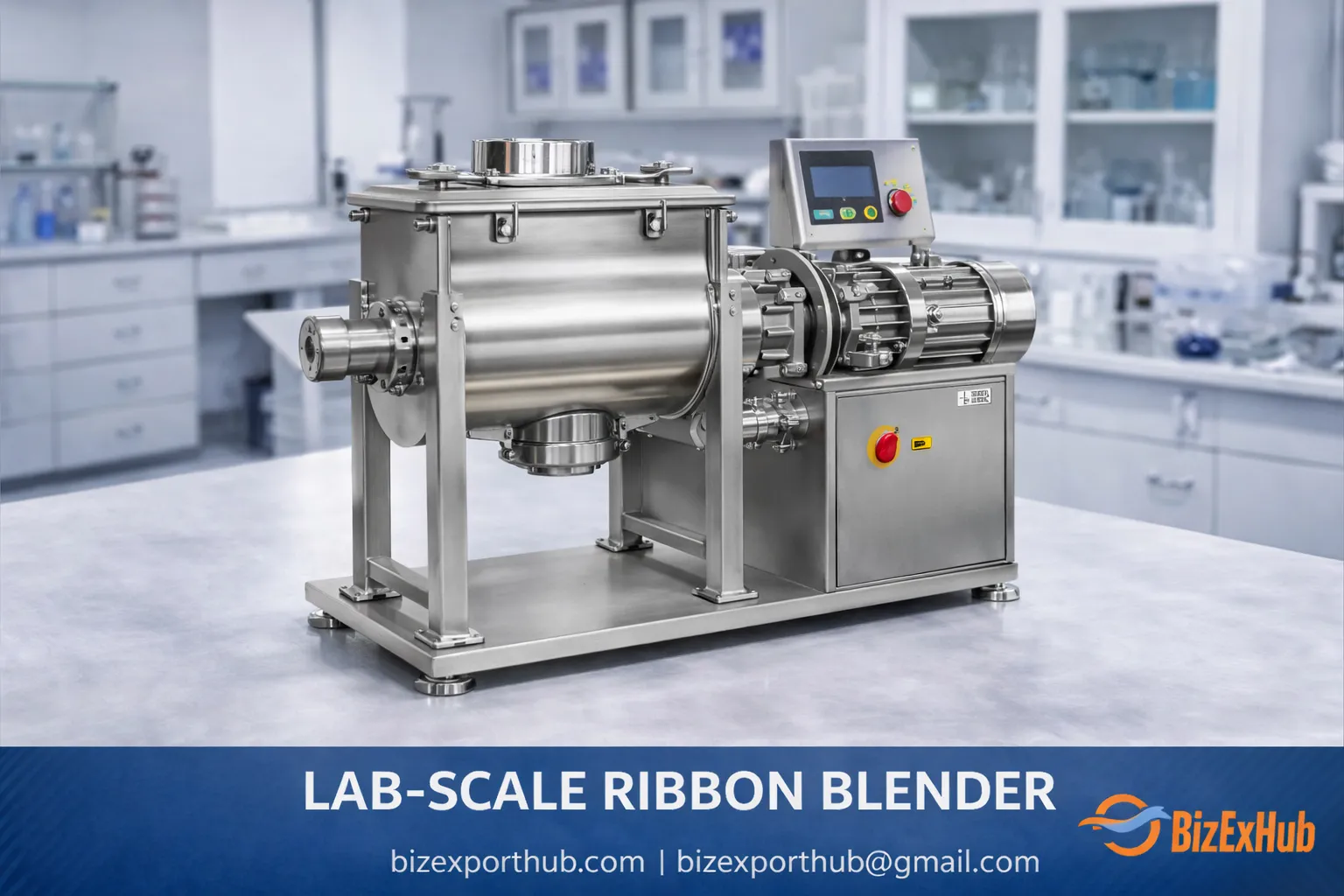
Why SS Ribbon Blenders Are Essential in Ahmedabad
Ahmedabad’s industrial production model is largely batch-based. In such environments, uniform mixing is not optional — it directly affects product quality and regulatory compliance.
Industries requiring ribbon blenders include:
| Industry Segment | Primary Requirement | Suitable Solution |
|---|---|---|
| Pharmaceutical | Uniform API blending | GMP SS Ribbon Blender |
| Nutraceutical | Fine powder homogeneity | Precision ribbon design |
| Food Processing | Frequent product change | Easy-clean SS 304 models |
| Chemical Manufacturing | Heavy-duty mixing | Reinforced SS 316 construction |
| Contract Manufacturing | Multi-product flexibility | Customizable configurations |
Consistent blending reduces rejection rates, minimizes reprocessing, and ensures operational efficiency.
Major Industrial Areas Driving Demand in Ahmedabad
Ahmedabad has multiple industrial clusters where demand for stainless steel ribbon blenders remains strong.
| Industrial Area | Dominant Industries | Typical Requirement |
|---|---|---|
| Vatva GIDC | Pharma, Chemicals, Dyes | GMP & Flameproof Models |
| Naroda GIDC | Chemical & Textile Units | Heavy-Duty Mixers |
| Odhav GIDC | Food Processing | Standard SS 304 Models |
| Kathwada GIDC | Plastics & Chemical Units | Reinforced Fabrication |
| Sanand | Large Manufacturing Plants | High Capacity Systems |
| Changodar | Food & Packaging | Hygienic Designs |
These zones generate steady demand due to expanding production capacities.
Types of SS Ribbon Blenders Available
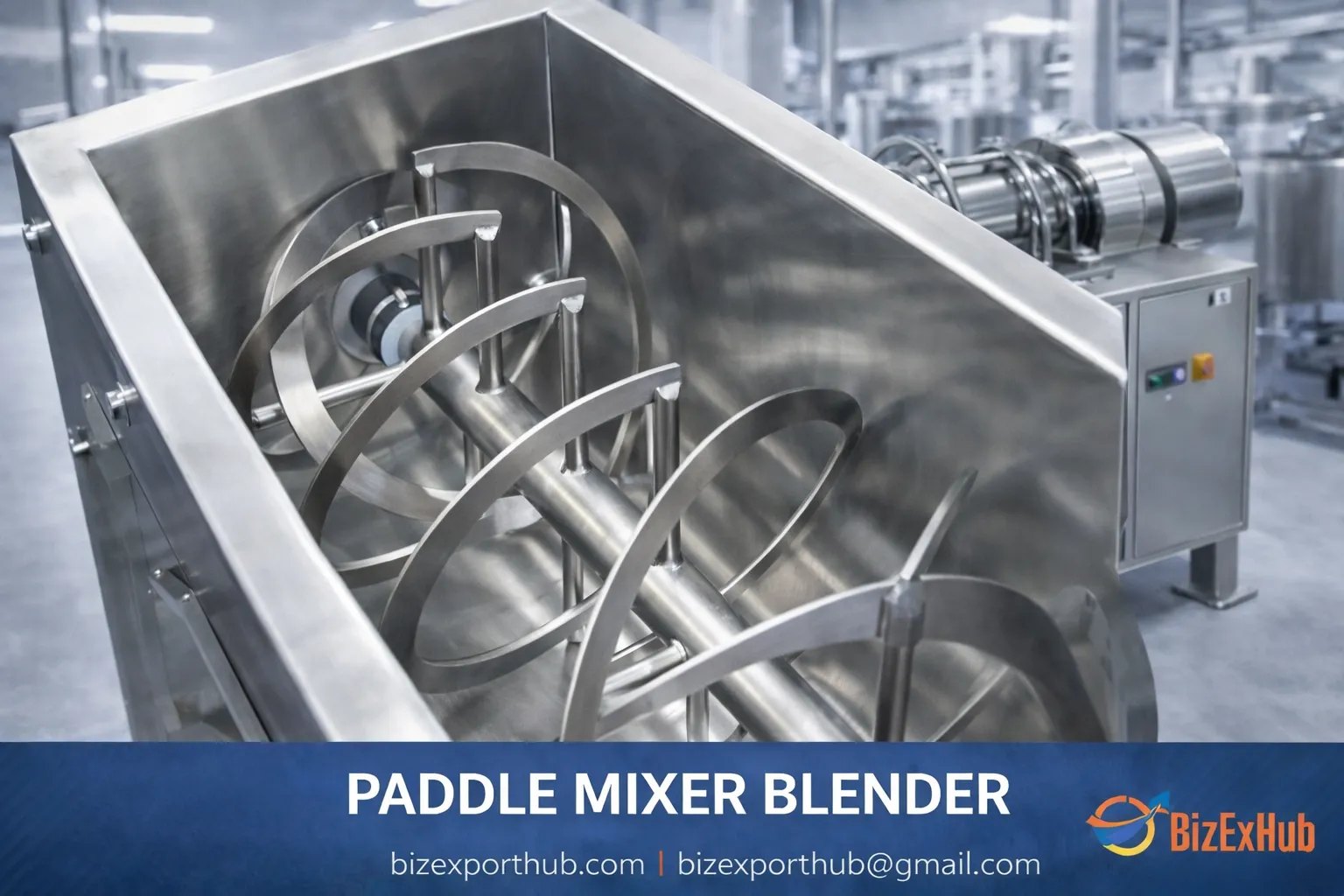
We help buyers source different types of ribbon blenders based on operational needs:
-
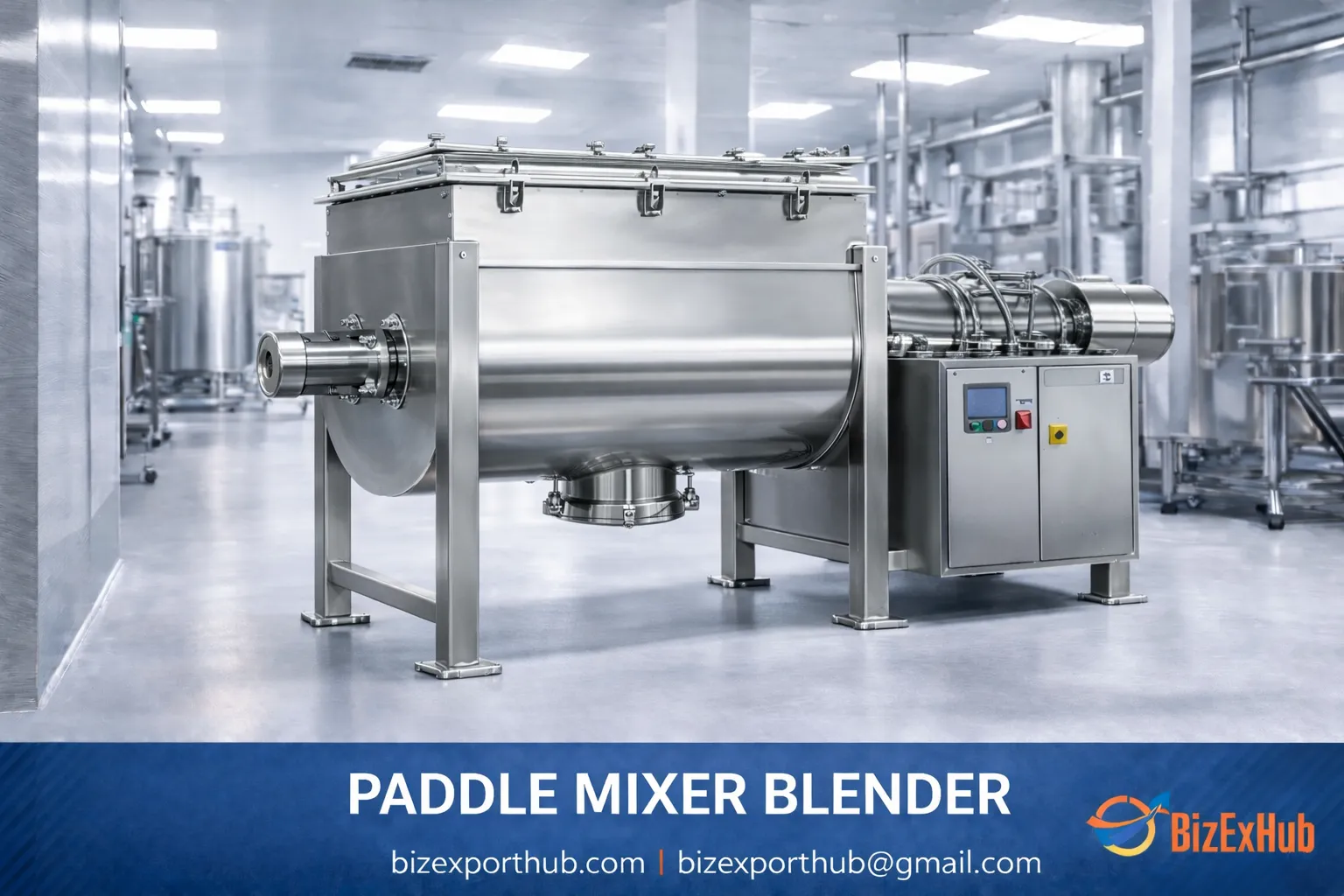
Standard SS Ribbon Blender
-
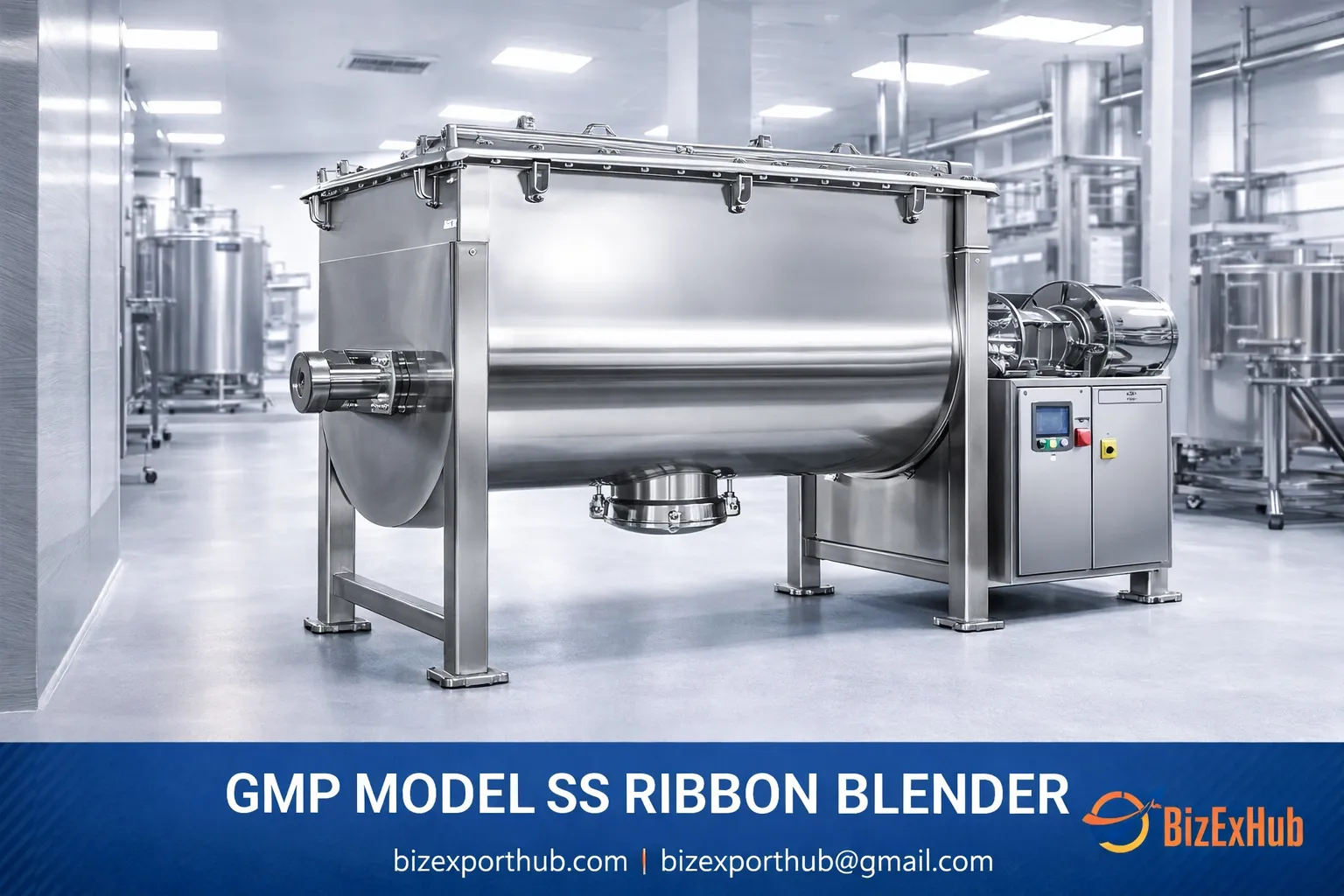
GMP Model Ribbon Blender
-
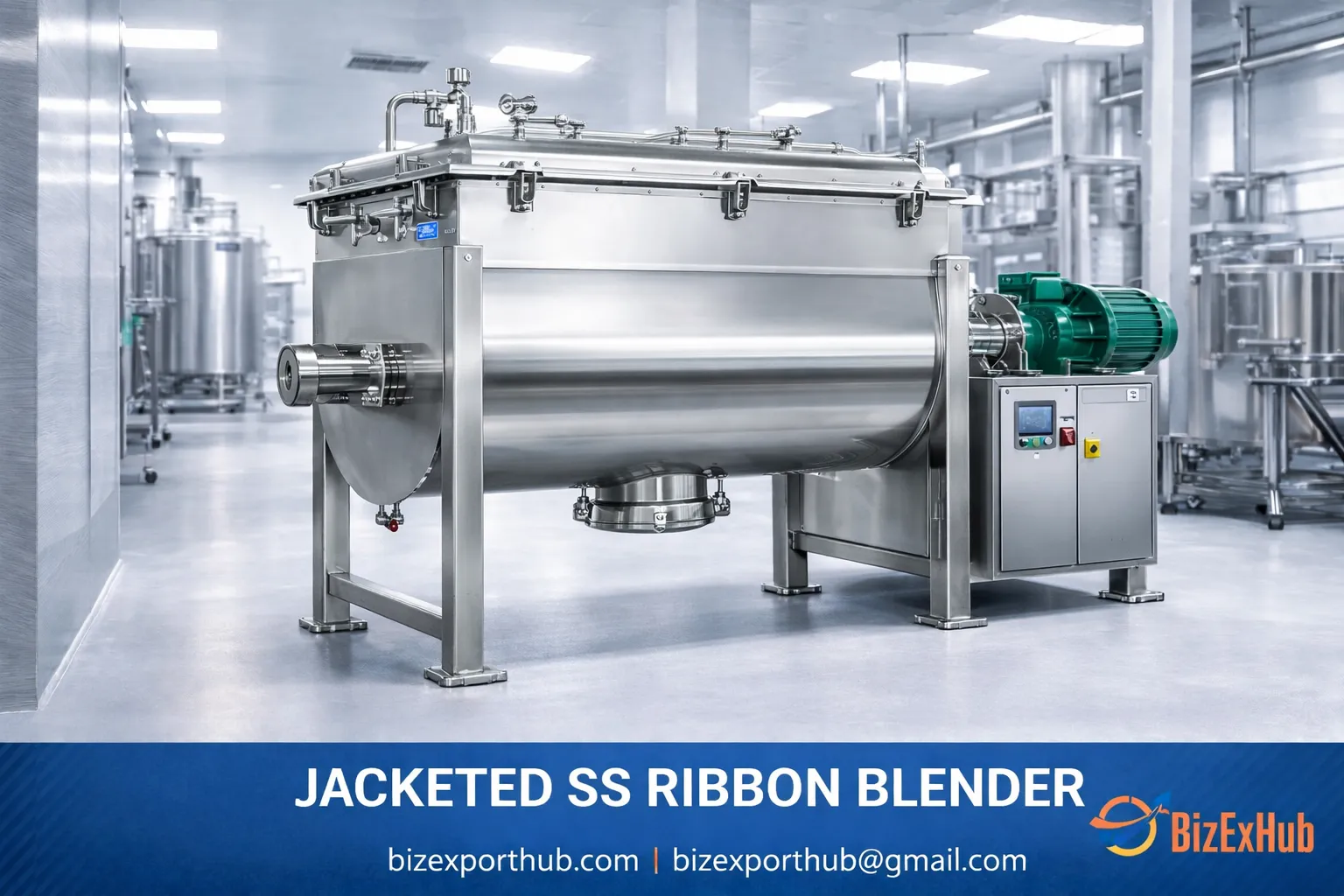
Jacketed Ribbon Blender
-
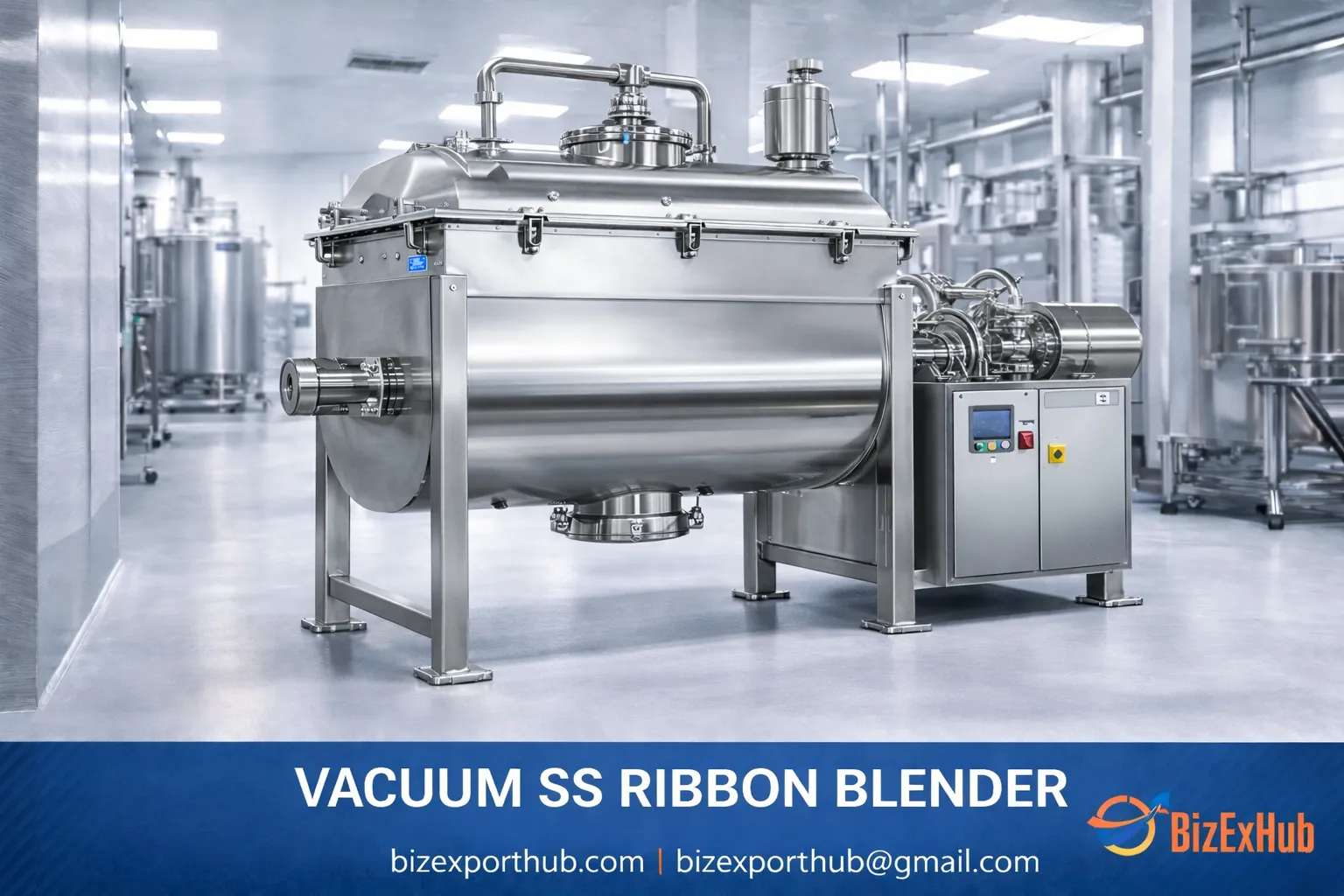
Vacuum Ribbon Blender
-
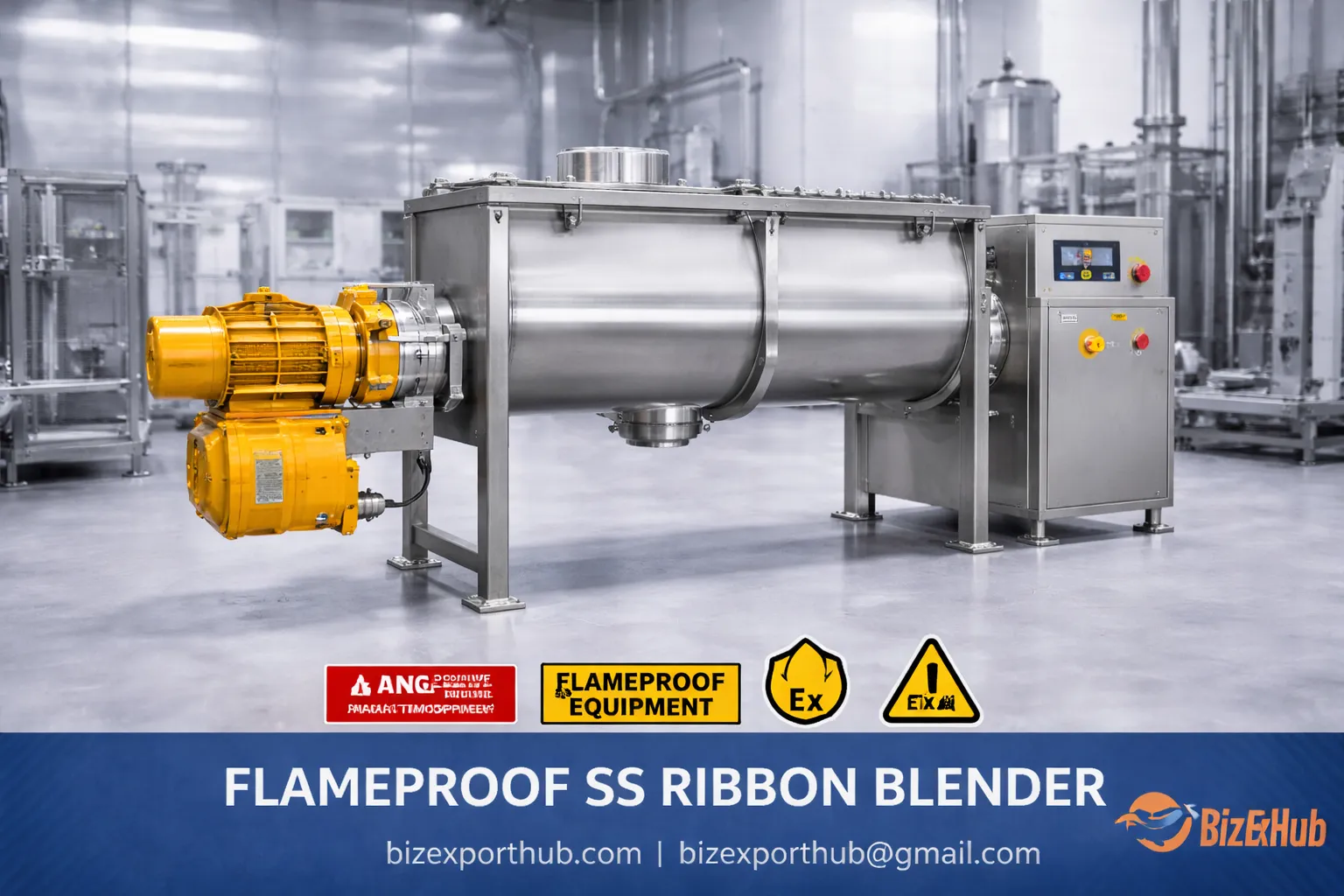
Flameproof Ribbon Blender
-
Ribbon Blender with Lump Breaker
-
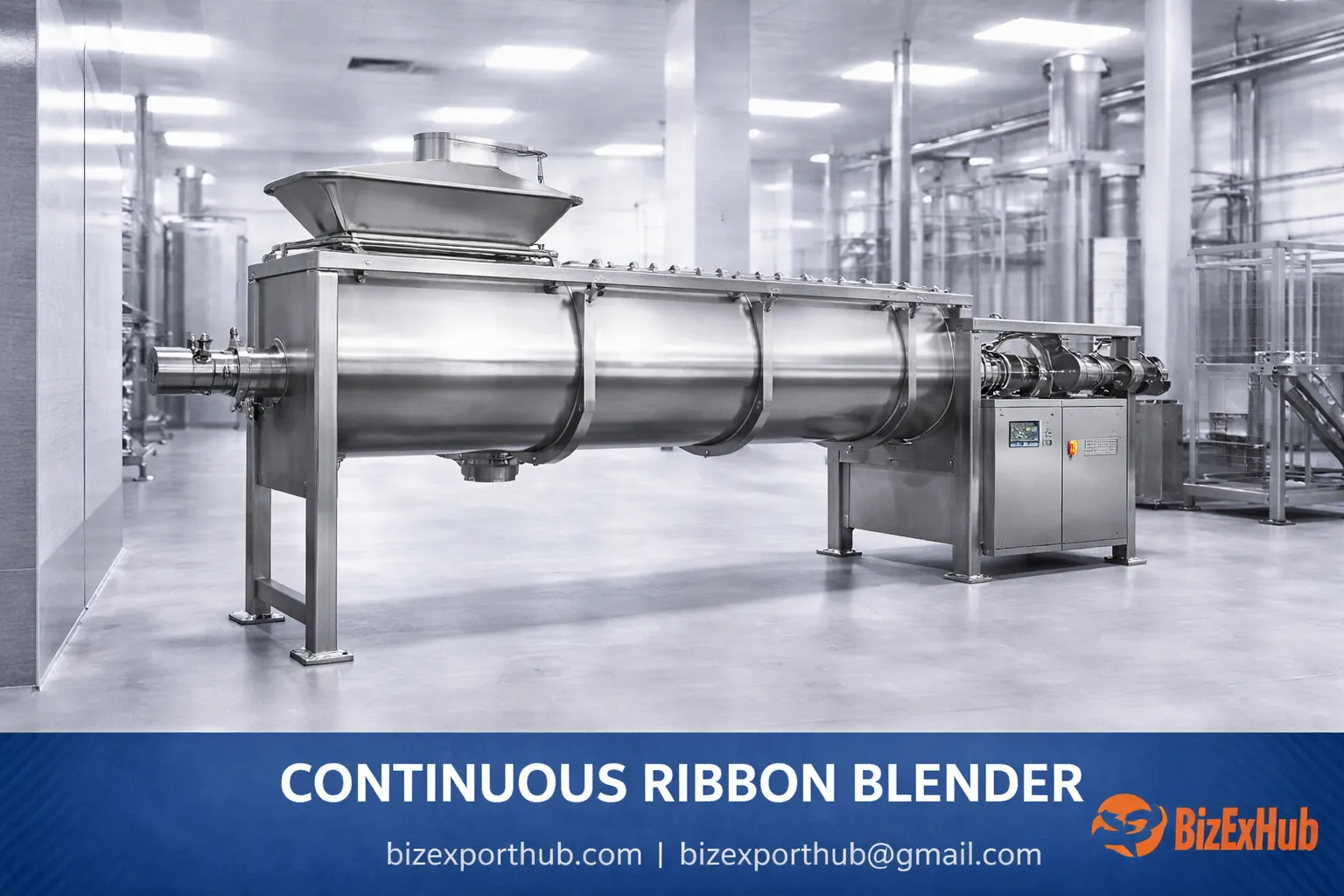
Continuous Ribbon Blender
Each type is selected according to material sensitivity, temperature control requirements, and production volume.
Capacity Range and Market Demand Trends
Choosing the correct capacity is critical for efficiency and long-term scalability.
| Production Scale | Typical Capacity Requirement |
|---|---|
| Small & Mid Units | 100 – 500 Liter |
| Growing Units | 500 – 1000 Liter |
| Large Production Units | 1000 – 3000 Liter |
| High Volume Plants | 3000 – 5000 Liter |
In Ahmedabad, the 500–1000 liter range sees the highest demand due to flexible batch processing needs.
Technical Customization Options
Every manufacturing setup is different. We assist buyers in sourcing machines with suitable technical specifications.
| Parameter | Available Options |
|---|---|
| Material Grade | SS 304 / SS 316 |
| Surface Finish | Mirror / Matt Polish |
| Discharge System | Slide Valve / Butterfly Valve |
| Drive System | Heavy-duty Industrial Motor |
| Control Panel | Manual / PLC-Based |
| Safety Configuration | Flameproof Option |
Customization ensures compatibility with powder characteristics and compliance standards.
Integrated Powder Processing Solutions
SS Ribbon Blenders are often part of a larger production system. We also assist in sourcing compatible equipment for seamless integration.
| Equipment | Application |
|---|---|
| Screw Conveyor | Powder feeding |
| Bucket Elevator | Vertical transfer |
| Vibro Sifter | Pre-mixing screening |
| Storage Hopper | Batch storage |
| Packing Machine | Final product filling |
Integrated systems improve workflow efficiency and reduce material handling losses.
Why Proper Manufacturer Selection Matters
Selecting the wrong manufacturer can result in:
-
Shaft misalignment
-
Uneven mixing
-
High vibration
-
Motor overload
-
Frequent maintenance
Through structured sourcing and supplier evaluation, we help reduce procurement risks and ensure quality fabrication standards.
Why Buyers Prefer Sourcing Through Us
| Sourcing Factor | Conventional Approach | Our Approach |
|---|---|---|
| Supplier Verification | Manual research | Verified manufacturers |
| Specification Comparison | Independent analysis | Structured evaluation |
| Quotation Process | Multiple follow-ups | Centralized communication |
| Customization Discussion | Limited clarity | Coordinated technical alignment |
| Procurement Timeline | Delayed | Streamlined |
We simplify industrial equipment sourcing for Ahmedabad-based businesses.
Frequently Asked Questions
What capacity ribbon blender is suitable for pharma units?
Most pharmaceutical manufacturers prefer 500–1000 liter GMP models because they provide uniform API blending, easier cleaning, and compliance-friendly construction suitable for batch production.
How do I calculate the right ribbon blender capacity?
Capacity depends on batch weight and material bulk density. The required blender volume is calculated by dividing batch weight by bulk density and allowing operational headspace. Future production expansion should also be considered before finalizing.
Is SS 304 sufficient or should I choose SS 316?
SS 304 is suitable for food and general powder mixing. SS 316 is recommended for corrosive chemicals, solvent-based materials, APIs, and moisture-sensitive formulations due to better corrosion resistance.
What is the typical mixing time?
Mixing time generally ranges between 10 to 20 minutes depending on powder density, particle size distribution, and ribbon configuration.
Can ribbon blenders handle sticky or cohesive powders?
Yes, with proper configuration such as lump breakers, modified ribbon geometry, or jacketed systems for temperature control. Material testing is recommended for difficult blends.
Do I need a flameproof ribbon blender?
Flameproof motors and control panels are required when handling volatile chemicals, flammable dust, or hazardous materials, particularly in chemical and dye industries.
What is the difference between a standard and GMP ribbon blender?
A GMP model includes mirror polishing, crevice-free welding, sanitary discharge valves, and documentation support, making it suitable for pharmaceutical and nutraceutical applications.
What documents are provided with the machine?
Manufacturers typically provide material test certificates, motor specifications, fabrication details, and surface finish documentation for GMP models.
Can ribbon blenders be customized for specific plant layouts?
Yes. Customization options include discharge height adjustment, motor positioning, jacketed configuration, automation panels, and platform integration.
Can automation be added later?
Yes, PLC panels, load cells, automated discharge systems, and safety interlocks can be integrated during manufacturing or retrofitted later.
What maintenance is required?
Routine maintenance includes bearing inspection, gearbox lubrication, shaft alignment checks, and cleaning after each batch. Proper upkeep significantly increases machine lifespan.
What is the average lifespan of an SS ribbon blender?
A well-fabricated stainless steel ribbon blender can operate efficiently for 10–15 years with regular preventive maintenance.
How much installation space is required?
Space requirements depend on capacity and discharge design. Adequate clearance for loading, discharge, and maintenance access must be planned before installation.
What is the typical delivery time?
Standard configurations may be delivered within 2–4 weeks, while customized or higher-capacity units may require 4–8 weeks depending on technical specifications.
What is the price range of SS ribbon blenders in Ahmedabad?
Pricing varies based on capacity, material grade, motor rating, and customization. Mid-range industrial units commonly fall within ₹6–12 lakhs, while large-capacity systems are quoted based on detailed requirements.
How does a ribbon blender improve production profitability?
It reduces mixing time, minimizes batch rejection, lowers labor dependency, supports multi-shift production, and improves overall process efficiency — directly improving operational margins.
Is a ribbon blender suitable for liquid mixing?
Ribbon blenders are primarily designed for dry powders and granules. For high-viscosity liquids or emulsions, alternative mixing equipment may be more appropriate.
When should a company upgrade its existing mixer?
Upgrading becomes necessary when production capacity increases, rejection rates rise, mixing time becomes inefficient, or compliance standards demand improved hygienic design.
Can ribbon blenders be integrated into a complete powder processing line?
Yes, they can be integrated with screw conveyors, bucket elevators, vibro sifters, storage hoppers, and packing machines for a streamlined production workflow.
Contact Us
Looking to install or upgrade an SS Ribbon Blender in Ahmedabad?
Share your requirement through our inquiry form or connect with us directly on WhatsApp for faster coordination.
For accurate manufacturer matching, please include:
-
Material type
-
Batch size
-
Required capacity
-
Industry segment (Pharma / Chemical / Food / etc.)
-
Compliance requirements (if any)
Our team will review your details and connect you with the most suitable verified manufacturer based on your production needs.
For quick assistance, click the WhatsApp button below and share your requirement directly with our sourcing team.