
Selecting the right tyre baling press machine is important for reducing storage space, lowering transport cost, and improving handling efficiency. Tyres are bulky, elastic, and reinforced, which means they require higher compression force compared to other scrap materials.
In actual market conditions, tyre baling machines are only used in the range of 50 ton to 100 ton. Machines below this capacity do not provide effective compaction and are not considered practical for tyre applications.
We offer tyre baling press machines in 50 ton, 60 ton, 90 ton, and 100 ton, with configuration options based on current working requirements in scrap yards and recycling units.
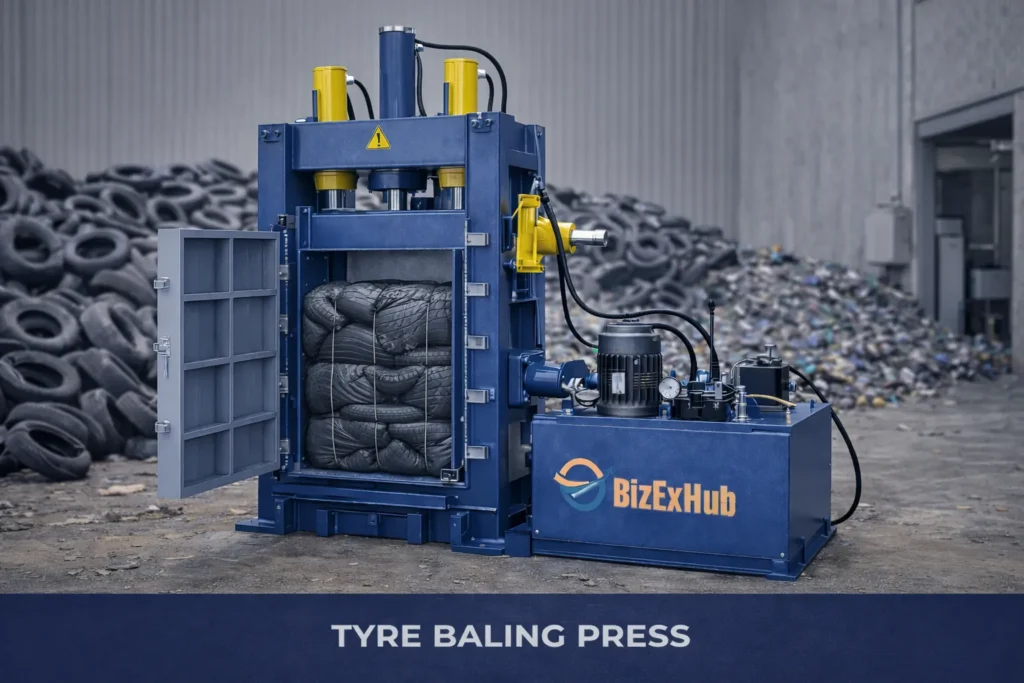
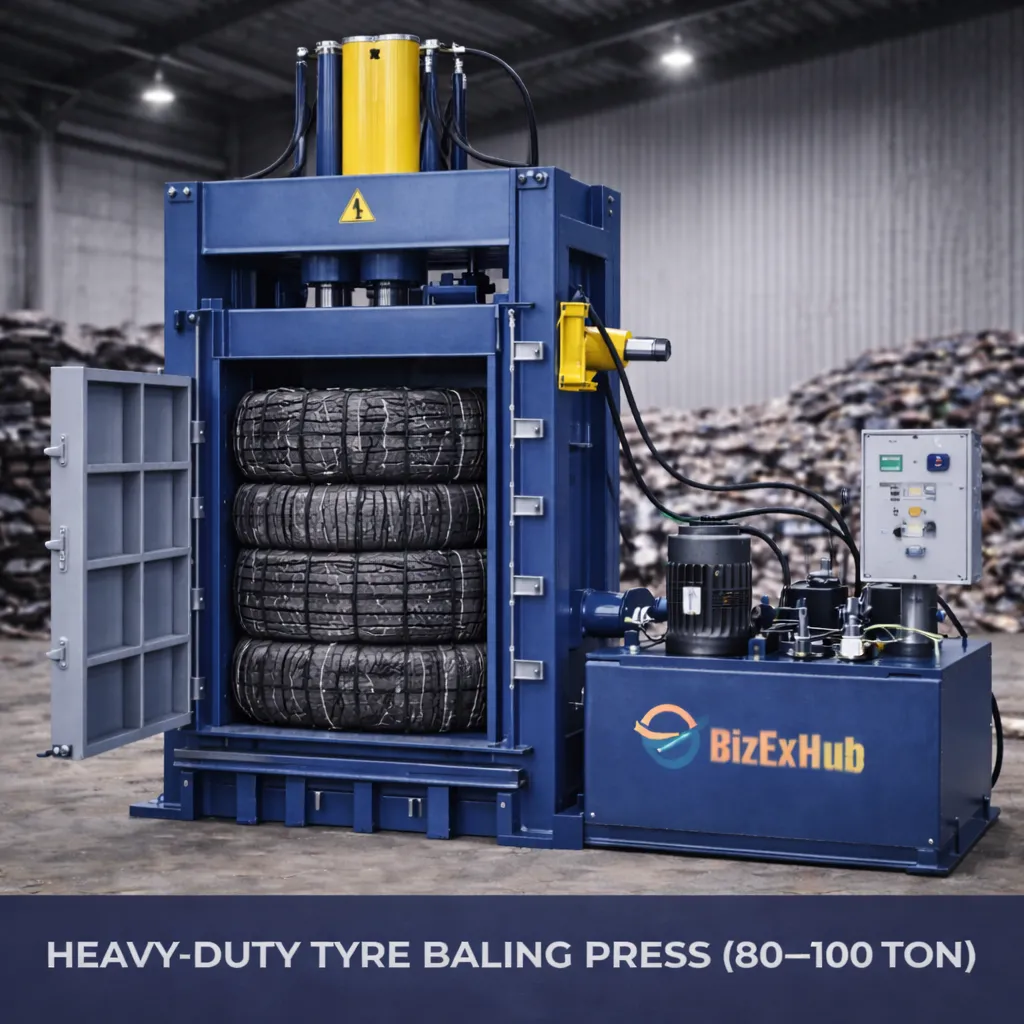
Machine Range and Application
| Capacity | Suitable Use | Practical Outcome |
|---|---|---|
| 50 Ton | Small tyre scrap dealers | Basic workable compaction |
| 60 Ton | Standard tyre recycling | Proper bale formation |
| 90 Ton | Heavy usage | High density and faster output |
| 100 Ton | Industrial scale | Maximum density and efficiency |
50 ton is the minimum workable option, while 60 ton is the most commonly selected machine for regular operations.
Key Technical Factors for Tyre Baling
Tonnage Requirement
Tyres resist compression due to their structure and elasticity.
- Insufficient tonnage leads to loose bales
- Adequate tonnage ensures compact and stable bales
For proper results, machines should start from 50 ton and above.
Cylinder Configuration
| Type | Performance |
|---|---|
| Single Cylinder | Basic performance |
| Double Cylinder | Strong pressure, consistent compression |
For tyre baling, double cylinder machines provide better force distribution and durability.
Bale Ejection System
| Type | Working |
|---|---|
| Manual | Slower, labour intensive |
| Hydraulic Pusher | Faster and efficient |
Tyre bales are heavier, so hydraulic ejection improves handling and reduces manual effort.
Motor and Power Requirement
| Capacity | Typical Motor |
|---|---|
| 50–60 Ton | 7.5–10 HP |
| 90–100 Ton | 15–20+ HP |
Higher capacity machines require more power due to resistance during compression.
Hydraulic System
A strong hydraulic system is essential for tyre applications.
Key elements:
- High-pressure pump
- Durable valves
- Adequate oil capacity
A reliable system ensures smooth operation and prevents overheating.
Bale Size and Density
| Machine | Bale Output |
|---|---|
| 50 Ton | Medium density |
| 60 Ton | High density |
| 90–100 Ton | Very high density |
Higher density bales reduce storage space and transport frequency.
Production Capacity
Machine efficiency depends on:
- Cycle time
- Number of bales produced
- Daily output
Higher tonnage machines improve production speed and consistency.
Machine Structure
Tyre baling requires a strong structure.
Important factors:
- Heavy-duty frame
- Thick plates
- Rigid construction
A strong machine maintains performance under continuous load.
Automation Options
| Type | Usage |
|---|---|
| Semi-Automatic | Most commonly used |
| Fully Automatic | High-volume operations |
Semi-automatic machines are widely used due to practicality and cost balance.
Configuration Options Available
Machines can be configured based on requirement:
- Single or double cylinder setup
- Hydraulic bale ejection system
- Different motor capacities
- Custom chamber size
- Heavy-duty hydraulic components
- Semi-automatic or automatic operation
This allows matching the machine with actual tyre handling volume and working conditions.
Selection Guide Based on Usage
| Tyre Volume | Recommended Machine |
|---|---|
| Low | 50 Ton |
| Medium | 60 Ton |
| High | 90 Ton |
| Very High | 100 Ton |
Correct selection ensures proper bale formation, efficient handling, and long-term performance.
Commercial Terms
- Price is quoted ex-works
- Hydraulic oil is charged extra
- Transportation is extra based on delivery location
- GST is charged as applicable
Final Note
Tyre baling requires proper machine selection due to the nature of the material. Machines below 50 ton are not suitable, and selecting the correct tonnage ensures stable bales, reduced handling effort, and better operational efficiency.
Enquiry
For accurate machine recommendation and quotation, share:
- Type of tyres (car, truck, mixed)
- Daily quantity
- Required output
This helps in providing the exact configuration suitable for your application.