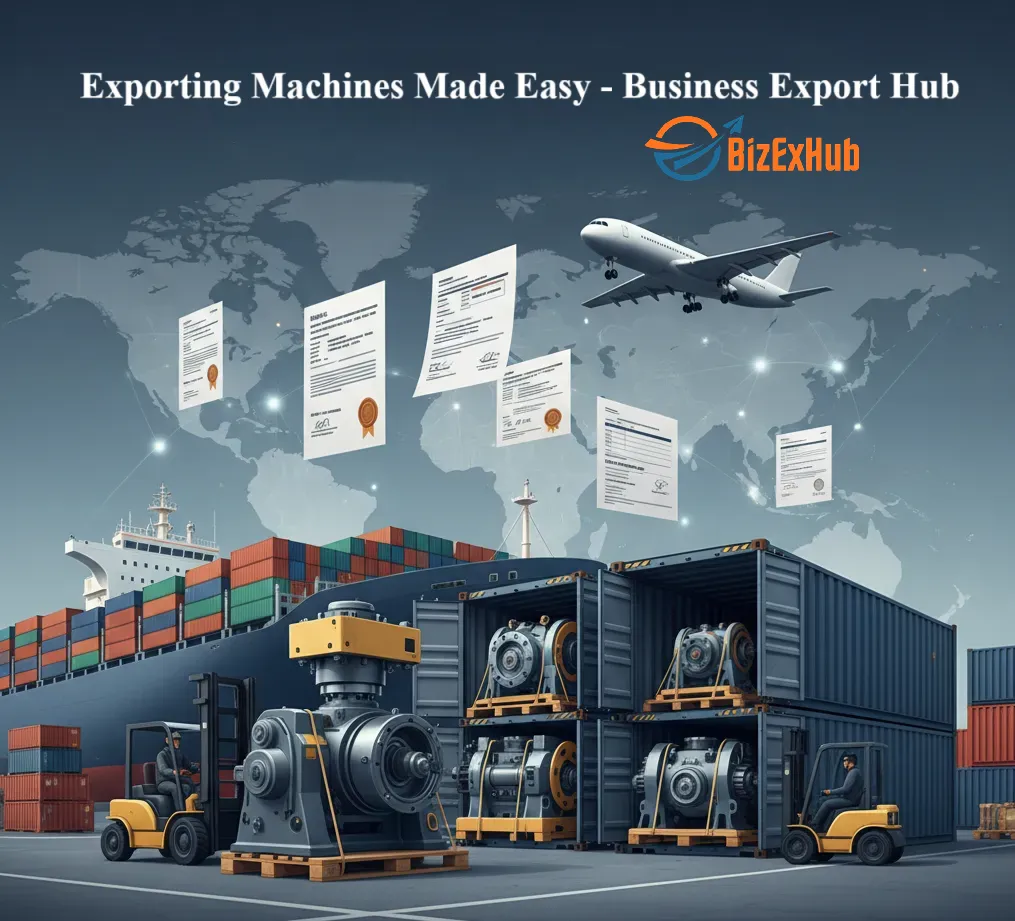
Since 2015, we have been assisting exporters, manufacturers, and industrial businesses in navigating the complexities of international trade. One of the most critical steps in exporting machinery is accurate classification using HS Codes. Misclassification can lead to customs delays, fines, or legal complications, while correct classification ensures smooth customs clearance, accurate duty payments, and compliance with global trade regulations.
This guide is designed to be the ultimate reference for all exporters of machinery, from CNC machines and packaging equipment to dairy processing plants and textile machinery. It includes detailed explanations, country-specific nuances, tools, best practices, and FAQs with exhaustive answers.
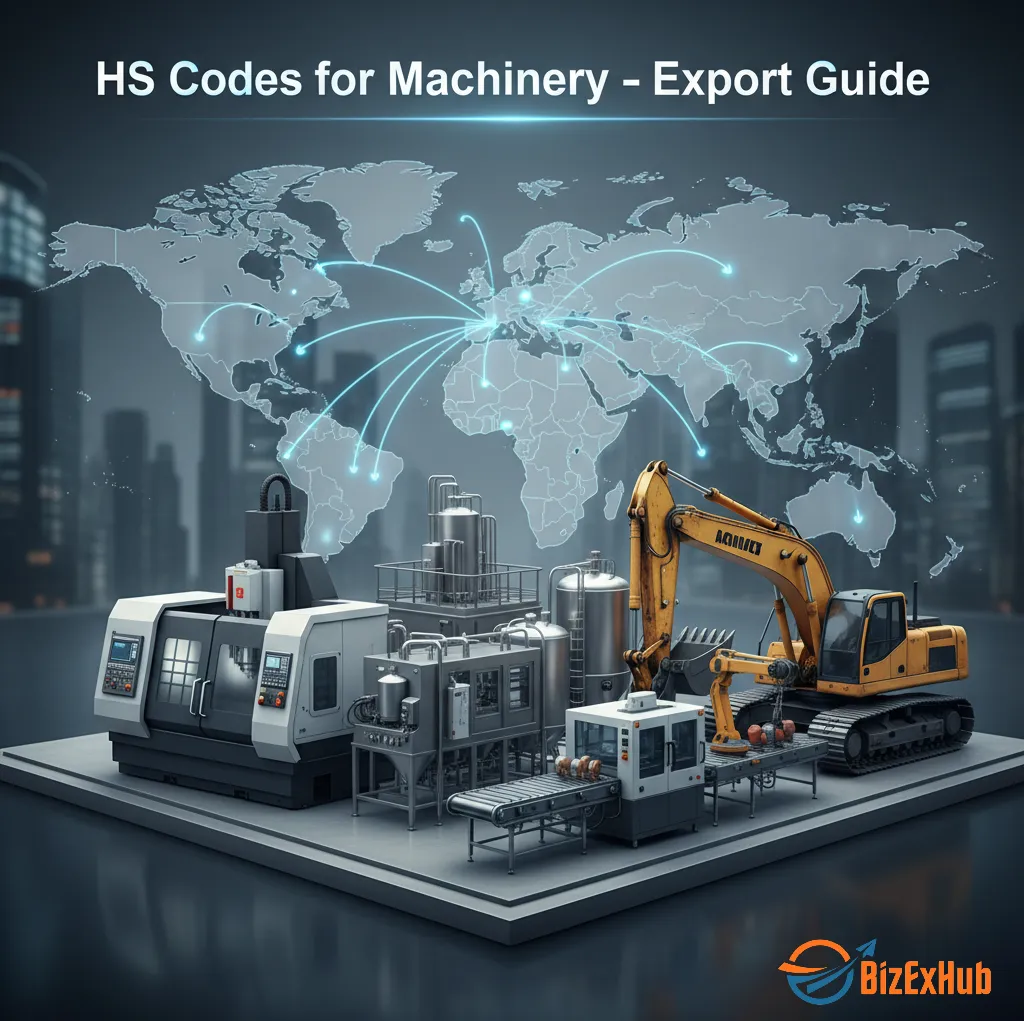
What Are HS Codes?
HS Codes, or Harmonized System Codes, are internationally standardized numerical codes used to classify traded products.
-
Developed by: World Customs Organization (WCO)
-
Purpose:
-
Standardizes product classification globally
-
Determines customs duties, taxes, and compliance requirements
-
Tracks trade statistics and economic data
-
Structure of HS Codes
HS Codes follow a hierarchical system:
-
Chapter (first 2 digits): Broad product category
-
Heading (next 2 digits): Product family within the chapter
-
Subheading (last 2 digits of 6-digit code): Specific product type
-
Extended digits: Countries may extend codes to 8 or 10 digits for local classification
Example:
| Product | HS Code (6-digit) | Country-specific Extension | Notes |
|---|---|---|---|
| CNC Machine | 8456.10 | US: 8456.10.00, EU: 8456.10.00 | Metalworking machine tool |
| Dairy Processing Machine | 8438.10 | US: 8438.10.00.00, EU: 8438.10.00 | Pasteurizer, homogenizer |
| Packaging Machine | 8422.30 | US: 8422.30.00.00 | Filling, sealing, labeling |
Why HS Codes Are Critical for Exporters
1. Smooth Customs Clearance
Correct HS Codes prevent delays, inspections, or confiscation. Misclassification often leads to shipment holds and additional costs.
2. Accurate Duty Calculation
HS Codes determine import/export duties, VAT, and taxes. Proper classification ensures correct duty payments and avoids fines.
3. Legal Compliance
Incorrect HS Codes can result in penalties or legal action in importing countries. Customs authorities frequently audit shipments for compliance.
4. Trade Statistics and Reporting
HS Codes allow governments and trade bodies to track exports and imports, influencing trade policies and economic data.
5. Building Buyer Trust
Accurate HS Codes assure buyers that your machinery meets international regulations, reduces shipment delays, and supports smooth transactions.
HS Codes for Different Types of Machinery
Machinery falls under Chapter 84 of the Harmonized System. Below is a detailed classification for exporters:
| Machinery Type | Common HS Code | Description / Use |
|---|---|---|
| CNC Machines | 8456.10 | Milling, turning, drilling machines |
| Lathes & Machine Tools | 8458 | Lathes, grinding, cutting machines |
| Packaging Machines | 8422.30 | Filling, sealing, labeling machines |
| Construction Machinery | 8429.52 | Cranes, bulldozers, excavators |
| Dairy Processing Machines | 8438.10 | Pasteurizers, homogenizers, separators |
| Textile Machinery | 8445.11 | Weaving, spinning, knitting machines |
| Food Processing Machines | 8438 | Industrial processing of food or drink |
| Printing Machinery | 8443 | Printing presses, digital printers |
| Plastic & Rubber Machines | 8477 | Extruders, molding machines |
| Industrial Robots | 8479 | Automated assembly and handling machines |
Tip: Always verify HS Codes with destination country customs authorities, as extended digits may differ.
Country-Specific HS Code Considerations
While the first six digits are standardized, countries extend them for local classification:
United States (HTS Codes)
-
Uses Harmonized Tariff Schedule (HTS)
-
Example: CNC milling machine → 8456.10.00.00
-
Duties, import regulations, and documentation depend on the HTS code
European Union (CN Codes)
-
Uses Combined Nomenclature (CN)
-
Example: Dairy pasteurizer → 8438.10.00
-
VAT, duties, and compliance certificates (CE marking) required
India (ITC HS Codes)
-
Uses Indian Trade Classification (HS) codes
-
Example: Textile machinery → 8445.11.00
-
Export promotion schemes may depend on HS code
Other Regions
-
GCC countries (UAE, Saudi Arabia) use 8–10 digit codes
-
Southeast Asia (Thailand, Singapore) may have regional variants
Always check HS codes with official customs portals for accuracy.
Step-by-Step Guide to Correct HS Code Classification
-
Identify Machinery Specifications
-
Function, components, material, power, and intended use
-
-
Consult HS Code Directories
-
Use WCO directories, national customs portals, or HS lookup tools
-
-
Check Country-Specific Tariffs
-
Ensure classification aligns with duties, taxes, and regulations
-
-
Seek Expert Guidance
-
For complex machinery, consult customs brokers or freight forwarders
-
-
Update Regularly
-
HS Codes are revised every 5 years; always use the latest version
-
Common Mistakes to Avoid
-
Using outdated HS Codes
-
Applying a code for a similar but different machine
-
Ignoring country-specific extensions
-
Failing to provide detailed specifications to customs
-
Not updating HS Codes after machine modifications
Tools and Resources for HS Code Lookup
-
iCustoms: AI-powered platform for HS classification
-
TradeMap / WITS: Global trade statistics and HS code references
-
National Customs Portals: US HTS, EU TARIC, India ICEGATE
Using these tools reduces the risk of delays, penalties, and misclassification.
Best Practices for Exporters
-
Maintain Documentation: Technical sheets, manuals, and certificates
-
Verify HS Codes per Country: Avoid assuming codes are universal
-
Consult Experts: Use brokers or trade consultants for complex machinery
-
Train Teams: Sales, logistics, and export teams should understand HS classification
-
Monitor Changes: HS Codes are revised regularly
Special Considerations for Certain Machinery
-
Packaging Machines: May require safety certificates
-
Food & Dairy Machines: Compliance with FDA, CE, or ISO standards
-
CNC & Industrial Machines: Export licenses may be required
-
Textile Machines: HS code may affect tariff concessions or trade incentives
Comprehensive FAQ Section: The Ultimate Exporter Reference
1. Basics & Definitions
Q1: What is an HS Code?
HS Codes are numerical codes used internationally to classify products in trade.
Q2: Who maintains HS Codes?
The World Customs Organization (WCO) develops and updates the codes every 5 years.
Q3: Are HS Codes the same worldwide?
The first 6 digits are standardized, but countries extend codes to 8–10 digits for local use.
Q4: Why are HS Codes important?
They determine duties, taxes, customs clearance, and trade compliance.
2. Machinery Classification
Q5: Which chapter covers machinery?
Chapter 84 covers industrial machinery, machine tools, and mechanical appliances.
Q6: How do I classify CNC machines?
Typically under HS Code 8456.10, but verify with destination-specific extensions.
Q7: How about packaging or food processing machines?
Packaging → 8422.30
Food processing → 8438
Always confirm country-specific variations.
Q8: Can one machine have multiple HS Codes?
Yes, if the machine serves multiple functions, but customs authorities usually assign one primary code.
3. Country-Specific Queries
Q9: Do HS Codes differ by country?
Yes, extensions and tariffs vary, even though the first six digits are standard.
Q10: How do I find HS Codes for USA, EU, India, UAE?
Use official portals:
-
USA → US HTS
-
EU → TARIC
-
India → ICEGATE
-
UAE → Federal Customs Authority portal
Q11: Do HS Codes affect duties and taxes?
Yes, duties, VAT, and exemptions are directly linked to the HS Code.
4. Compliance & Documentation
Q12: Is HS Code required for all exports?
Yes, it is mandatory for customs documentation and shipment clearance.
Q13: What happens if I use the wrong HS Code?
Risks include shipment delays, fines, or confiscation.
Q14: Do certificates like CE, ISO, or FDA affect HS classification?
Not directly, but they may be required to support customs clearance.
Q15: Should HS Codes match product specifications exactly?
Yes, customs reviews technical details and may reject mismatched codes.
5. Duty & Taxes
Q16: Can misclassification reduce duty?
Deliberately misclassifying goods is illegal and can lead to fines or seizure. Always classify accurately.
Q17: Are certain HS Codes eligible for trade incentives?
Yes, governments sometimes offer export promotion schemes based on HS classification.
6. Advanced Questions
Q18: How are subheadings and tariff lines different?
Subheadings define specific product categories, while tariff lines may include extended digits for duties.
Q19: Are temporary exports or exhibitions classified differently?
Yes, temporary exports may require ATA Carnet or other temporary classification documents.
Q20: How often are HS Codes updated?
Every 5 years by WCO, with some countries updating annually.
Q21: Can I appeal or challenge an HS Code?
Yes, you can appeal through customs authorities if classification is disputed.
7. Tools & Verification
Q22: Which tools help determine HS Codes?
-
iCustoms
-
TradeMap / WITS
-
National customs portals
Q23: Are AI-based tools reliable?
They are helpful for suggestions, but always verify with official portals or brokers.
Q24: How to track HS Code updates?
Subscribe to WCO notifications or national customs updates.
8. Lead & Buyer-Related Queries
Q25: Can incorrect HS Codes affect buyer trust?
Yes, delays or compliance issues erode trust.
Q26: Should HS Codes be included in product listings?
Yes, for B2B buyers, it helps verify customs compliance.
Q27: Can buyers verify HS Codes before purchasing machinery?
Yes, buyers often request HS Code confirmation to calculate duties and taxes.