
Aluminum cans such as beverage cans (Pepsi, Coke, etc.) are lightweight, thin, and high in volume. Because of their low density, the baling process focuses on reducing volume and improving handling rather than achieving very high bale weight.
This guide explains the actual working output, bale weight, and machine configuration used for aluminum can baling in real market conditions.
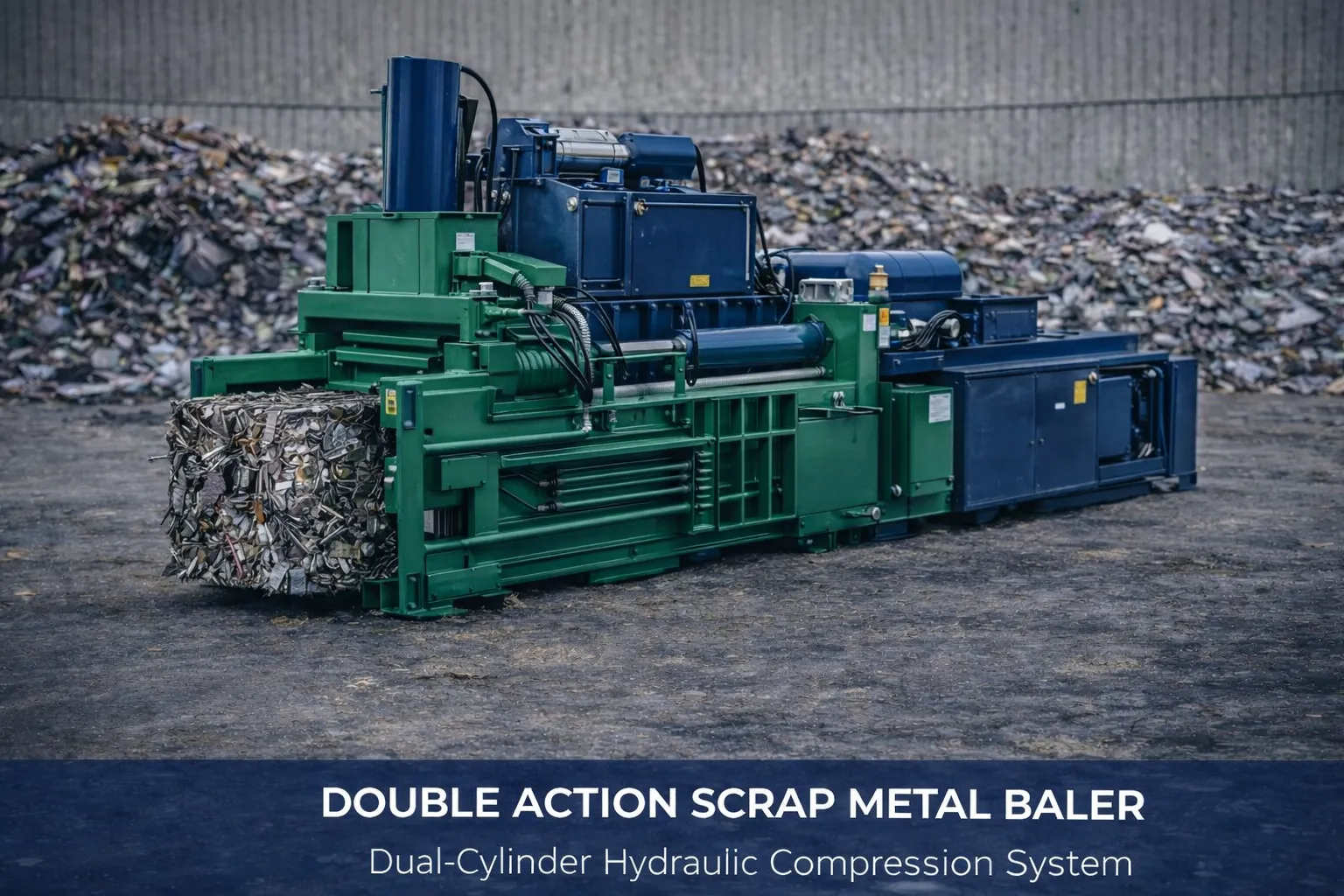
Machine Type Used for Aluminum Cans
| Machine Type | Usage |
|---|---|
| Vertical Baler (30–60 Ton) | Small to medium operations |
| Double Action Baler (40–80 Ton) | Most commonly used |
| Triple Action Baler | High volume industrial use |
For most applications, double action balers are the most practical and widely used.
Bale Weight (Practical Output)
| Machine Type | Bale Weight |
|---|---|
| Vertical Baler | 20–40 kg |
| Double Action Baler | 30–50 kg |
| Triple Action Baler | 40–60 kg |
Most operations produce 30–50 kg per bale, which is considered standard for aluminum cans.
Why Bale Weight Is Lower
Aluminum beverage cans are:
- Thin and lightweight
- Hollow in structure
- Low in density even after compression
Because of this:
- Bale weight remains limited
- Volume reduction is the main benefit
Production Capacity
| Machine | Bales per Hour | Bales per Day (8–10 hrs) |
|---|---|---|
| Vertical | 4–6 | 35–50 |
| Double Action | 5–8 | 40–70 |
| Triple Action | 6–10 | 50–90 |
Production depends on feeding method and operator efficiency.
Bale Size (Typical)
- Approx: 12″ to 18″ height bales
- Compact rectangular shape
- Size depends on chamber design
Smaller but dense bales are easier to store and transport.
Operation Type
| Type | Usage |
|---|---|
| Manual | Small setups |
| Semi-Automatic | Most commonly used |
| Automatic | High volume plants |
Semi-automatic machines are preferred due to cost and ease of operation.
Bale Ejection System
| Type | Description |
|---|---|
| Manual | Labour-based removal |
| Hydraulic Pusher | Faster and efficient |
Hydraulic ejection is recommended for better productivity.
Cylinder Configuration
| Type | Performance |
|---|---|
| Single Cylinder | Light duty |
| Double / Multi Cylinder | Better compression and durability |
Double or multi-cylinder systems are commonly used for consistent output.
Motor and Power Requirement
| Machine | Motor |
|---|---|
| Small | 5–7.5 HP |
| Medium | 7.5–10 HP |
| Heavy | 10–15 HP |
Power Supply: 3 Phase
Hydraulic System
- Working Pressure: 120–200 bar
- Oil Capacity: 120–250 liters
A stable hydraulic system ensures smooth operation and consistent bale formation.
Machine Structure
- Heavy-duty MS body
- Compact design for easy installation
Strong structure ensures long-term durability.
Space Requirement
- Approx 8 ft x 5 ft floor space
- Additional area for material handling
Bale Tying
- Manual tying with 2–4 wires
- Keeps bale compact and stable
Configuration Options
- Single or double cylinder
- Hydraulic bale ejection
- Custom chamber size
- Semi or fully automatic operation
Price Reference (Aluminum Can Baler)
| Machine Type | Typical Price |
|---|---|
| Vertical Baler | ₹2,30,000 – ₹3,50,000 |
| Double Action Baler | ₹3,50,000 – ₹7,50,000 |
| Triple Action Baler | ₹5,00,000 – ₹9,00,000+ |
Commercial Terms
- Price is ex-works
- Hydraulic oil extra
- Transportation extra
- GST extra as applicable
Final Summary
A properly selected aluminum can baling machine will:
- Produce 30–50 kg bales
- Reduce storage volume significantly
- Improve handling and transport efficiency
- Operate smoothly with semi-automatic control
Enquiry
To get the correct machine recommendation, share:
- Daily aluminum can quantity
- Required bale size
- Operation preference
This helps in selecting the right machine configuration for your application.