
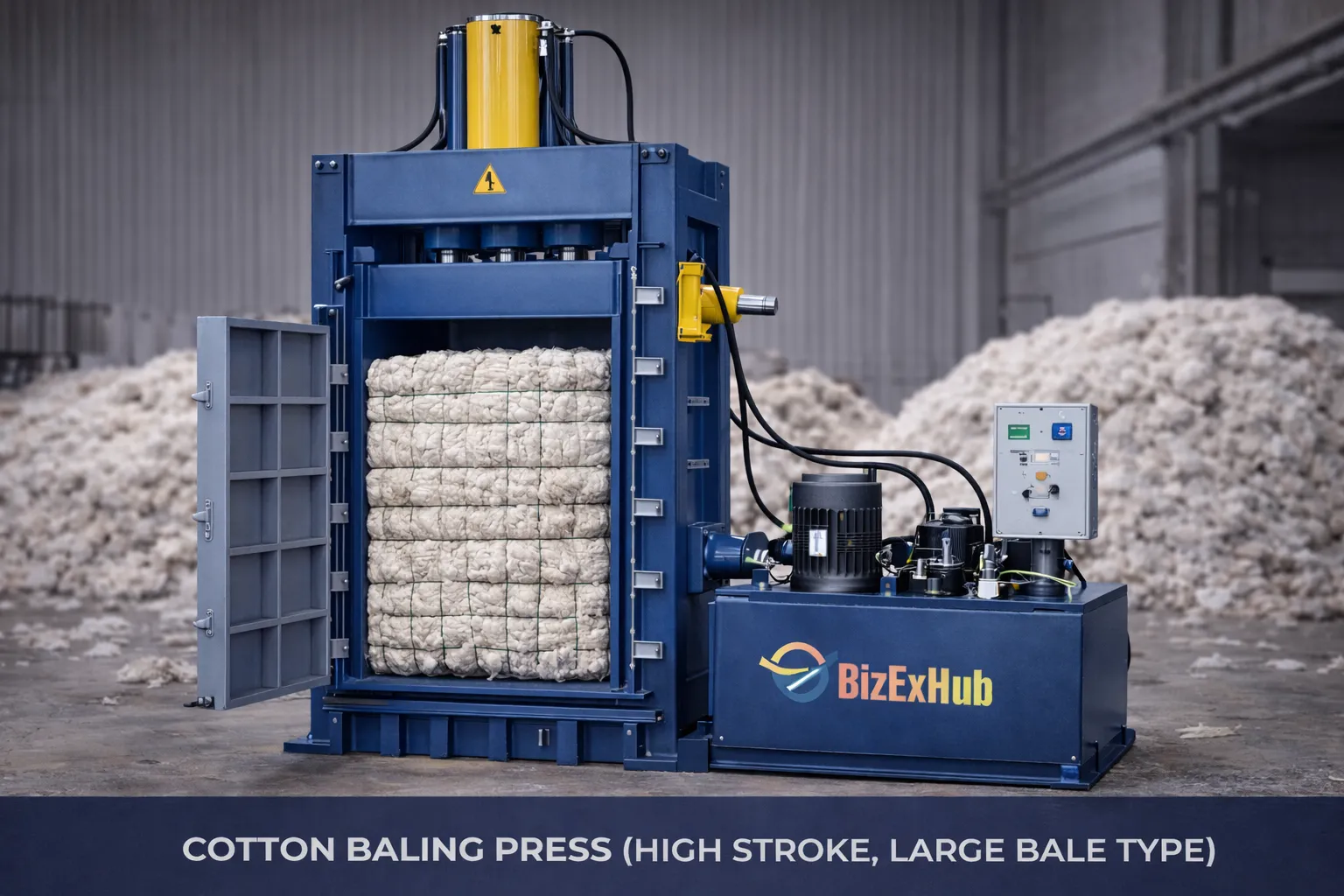
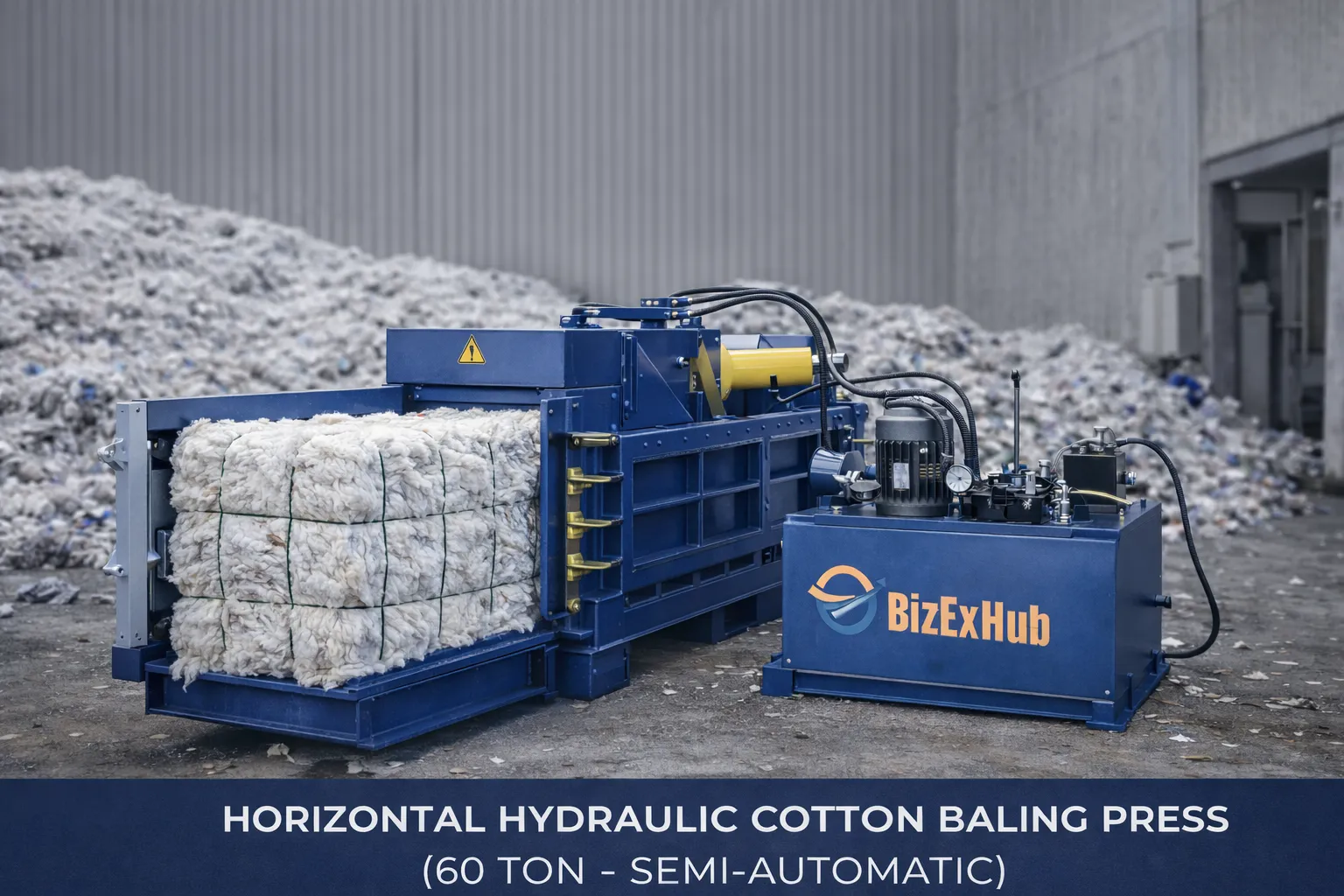
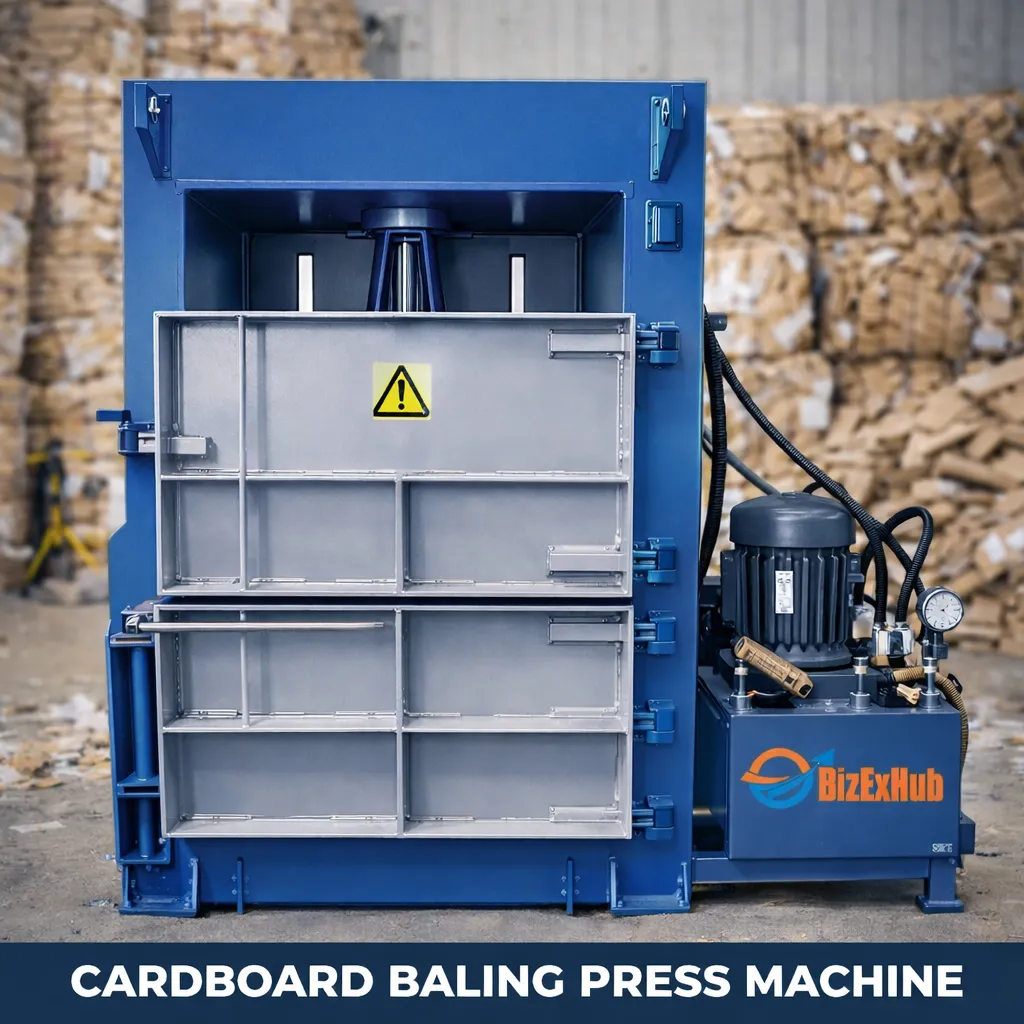
A baling press machine for cotton waste and cardboard must deliver consistent output, proper bale density, and smooth daily operation. Since both materials behave differently during compression, machine selection and configuration play a key role in performance.
Here is a complete clarity on production capacity, bale weight, machine specifications, operation type, and configuration so that the right machine can be selected without confusion.
Price Reference (Based on Current Market)
| Machine | Typical Price |
|---|---|
| 30 Ton | ₹2,50,000 – ₹3,25,000 |
| 50 Ton | ₹3,50,000 – ₹4,50,000 |
| 60 Ton | ₹4,00,000 – ₹6,50,000 |
Price Clarification
Prices vary based on machine configuration, including:
- Cylinder type (single or double)
- Hydraulic pusher (included or not)
- Motor capacity
- Chamber size
- Automation level
For example, a 50 ton machine price can change depending on features and build quality.
Commercial Terms
- Price is ex-works
- Hydraulic oil extra
- Transportation extra
- GST extra as applicable
Machine Range and Practical Use
| Capacity | Suitable Use | Practical Outcome |
|---|---|---|
| 30 Ton | Light work | Basic compaction |
| 50 Ton | Standard operations | Balanced performance |
| 60 Ton | Heavy or continuous use | High density and faster output |
For combined use of cotton waste and cardboard, 50 ton is most commonly used, while 60 ton is preferred for higher production and tighter bales.
Production Capacity (Bales Per Day)
| Machine | Bales per Hour | Bales per Day (8–10 hrs) |
|---|---|---|
| 30 Ton | 4–6 | 35–50 |
| 50 Ton | 5–8 | 40–70 |
| 60 Ton | 6–10 | 50–90 |
Production depends on operator efficiency and material handling. Cardboard cycles are faster if stacked properly, while cotton waste requires proper filling.
Bale Weight (Kg per Bale)
| Material | 30 Ton | 50 Ton | 60 Ton |
|---|---|---|---|
| Cotton Waste | 60–100 kg | 100–150 kg | 120–180 kg |
| Cardboard | 80–120 kg | 120–200 kg | 150–250 kg |
Higher tonnage produces tighter and heavier bales.
Bale Size and Chamber Size
- Typical Bale Size: Approx 24″ x 36″ x 30″
- Chamber Size: Approx 30″ x 40″ x 60″
- Custom sizes available based on requirement
Proper chamber size ensures easy loading and better bale formation.
Cycle Time
- Approx 60–90 seconds per cycle
- Depends on material and operator
Faster cycle time increases daily production.
Operation Type
| Type | Working |
|---|---|
| Manual | Full operator control |
| Semi-Automatic | Pressure auto control, manual tying |
| Fully Automatic | Continuous operation |
For cotton and cardboard, semi-automatic is most practical and widely used.
Bale Ejection System
| Type | Description |
|---|---|
| Manual | Labour-based removal |
| Hydraulic Pusher | Automatic bale ejection |
For 50 ton and above machines, hydraulic pusher is recommended for faster operation and reduced labour.
Cylinder / Piston Configuration
| Type | Performance |
|---|---|
| Single Cylinder | Suitable for light use |
| Double Cylinder | Better pressure and durability |
For dual material use, double cylinder is preferred in 50 ton and 60 ton machines.
Motor and Power Requirement
| Machine | Motor |
|---|---|
| 30 Ton | 5–7.5 HP |
| 50 Ton | 7.5–10 HP |
| 60 Ton | 10 HP |
Power Supply: 3 Phase
Proper motor selection ensures smooth and efficient operation.
Hydraulic System
- Working Pressure: 150–250 bar
- Oil Tank Capacity: 150–300 liters
A strong hydraulic system ensures consistent pressure, low maintenance, and long machine life.
Machine Structure and Weight
- Heavy-duty MS fabricated body
- Thick plate construction
| Machine | Approx Weight |
|---|---|
| 30 Ton | 1500–2000 kg |
| 50 Ton | 2000–3000 kg |
| 60 Ton | 2500–3500 kg |
Heavier machines provide better strength and durability.
Space Requirement
- Approx 10 ft x 6 ft floor space
- Additional space for material handling
Proper installation space ensures safe and efficient operation.
Bale Tying System
- Manual tying
- 3 to 5 tying points
Ensures strong bale structure and easy transport.
Material Handling Guidelines
Cotton Waste:
- Fill evenly in layers
- Avoid loose filling
Cardboard:
- Stack properly before pressing
- Avoid random feeding
Do not mix both materials in one bale.
Configuration Options Available
- Single or double cylinder
- Hydraulic bale ejection system
- Different motor capacities
- Custom chamber size
- Heavy-duty hydraulic components
- Semi-automatic or automatic operation
Selection Guide
| Requirement | Recommended Machine |
|---|---|
| Light use | 30 Ton |
| Standard use | 50 Ton |
| Heavy / continuous | 60 Ton |
Commercial Terms
- Price is ex-works
- Hydraulic oil extra
- Transportation extra
- GST extra as applicable
Delivery and Support
- Delivery Time: 10–20 working days
- Installation support available
- Service support available
- Warranty: 12 months (as applicable)
Final Summary
A properly selected baling press machine for cotton waste and cardboard will:
- Produce 40 to 90 bales per day
- Deliver 100 to 200+ kg bale weight
- Operate with semi-automatic efficiency
- Reduce labour and handling effort
- Provide consistent and reliable performance
Enquiry
Share your requirement to get exact machine recommendation and quotation:
- Material type (cotton waste, cardboard, or both)
- Daily quantity
- Required bale size
This helps in providing the correct configuration and best suitable machine.